Duncan Wilcock

duncan@wilcock.ca

e-Bikes: No Traffic.
Easy Parking. Join the Fun!

Thursday, August 18, 2022

Cars Dehumanize Us

I don't love cars. I drive one fairly often, and have since I was 16. So I'm a driver too, and not always an angel behind the wheel.

Woman stuck in a car, not happy
With a long time passion for sustainability, that was a key reason I bought an eBike 4 years ago.  I quickly started to notice however how much more engaged I can be with the people I see biking or walking when I'm on my eBike.  Also how much more engaged my 4 year old son is with the world around him.  Not to mention healthier, more fun, and in most cases faster - yes, faster door-to-door than driving!    

A quite complete vision of "more livable" cities is outlined in this book I highly recommend: Curbing Traffic. Here I'll focus on one aspect of a more livable city life: communication, and how we treat each other on our streets.  As both person riding a bike, and a person driving a car -  I've observed how hard it can be to communicate - both for conflict, and even for pleasant/friendly interaction - through the walls of the metal-boxes we use to cart ourselves around our cities.

Communication is our Super Power

The complex and nuanced communication we have evolved is one of the most defining features of being a human, and therefore surrendering our ability to communicate effectively - makes us something less than we are - it dehumanizes us.

Some specific examples, of typical (ineffective) communication in a car:

  1. Communication is reduced to honking, or gesticulating - rudely or otherwise.   Consider the attempt to "beep" vs. HOONNNK - it's absurd!
  2. Eye contact is hard at best, often impossible due to glare and speed
  3. You are reduced to "body language" of "inching forward," or moving the vehicle aggressively (or if you are kind - perhaps allowing someone to pass)
  4. You often only have fleeting moments for that communication because:

a. You are likely travelling at some speed so only are close enough for audible or visual communication very briefly

b. The press of the queue behind you, including the large amount of space your vehicle blocks in the road way, and the willingness (as well as cultural acceptedness) of blaring horns behind you, doesn't permit you to stop and communicate more clearly.

No wonder many drivers seem frustrated and inconsiderate!  Compare that to walking on the sidewalk, or biking at lower speeds (10km/h to 20km/h):

  1. You can speak to someone - in a friendly voice, or urgently, sharply, etc - the full-range of human vocal communication & nuance
  2. You can clearly make eye-contact, and any body language you want to communciate - the full range of human gestures & body language.  Perhaps a bit less if your hands are steering a bike.
  3. You can stop, and engage in a fuller communication - either friendly or to express your discontent.  Assert yourself.  Even if the person walks away - you have a much more innate sense of whether you were heard.

More effective communication potential

I'm writing this from a place of self-reflection. I drive a lot at times, and do try to ride my bike a lot, as well as transit, but I'm very much pointing the finger at myself too. I'm not always a friendly driver.

Cars are great at times.  They are useful for medium to longer trips. However the more people populate a given city, the bigger problem they become.   Cities get less pleasant to be in.  More space, bollards, sidewalks, and infrastructure needs to be built to keep the rest of us safe from the cars & trucks.   If you think about it - bollards, sidewalks, "pedestrian overpasses" are all car infrastructure.  We wouldn't need them if we didn't have the cars & trucks there!

The reason we have that infrastructure is to protect the people who aren't in cars, from people who are in cars -  behaving badly.  

Why are the people drive cars & trucks behaving badly?  Because we have become less human.

So walk more. Take transit more. Get a bike, or an eBike, and be the change you want to see in the world.

I'm trying. ✌️

Thursday, July 07, 2022

Rapidly Digitize 35mm Slides: My Workflow

I've recently taken on digitizing 35mm slides taken by my prolific-photographer of a father - Ross Wilcock.   It's a quite a job, I estimate about 25,000 photographs. I'll share a photo of the storage drawers later in the post.

I've worked out a process that is proving much faster than I initially imagined, and I'm now optimistic it's a job I could complete in the next 12 months.   It might be 100 hours of work, or perhaps a lot less, as I've been getting faster.

This post is to document the tools and a few tips I've learned so far.    The short version is to buy A & B below & off you go!


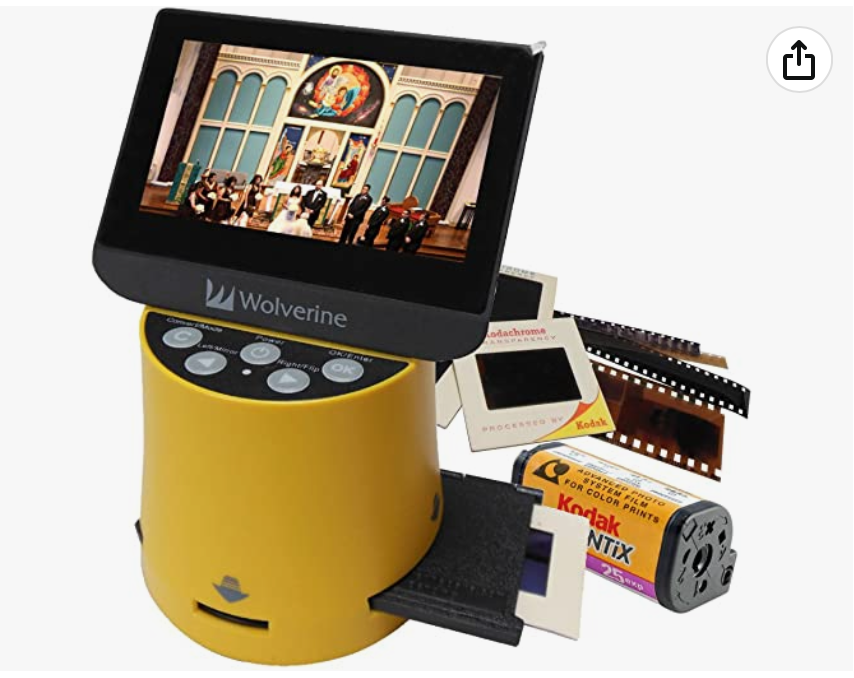
A.  Capture Device: Wolverine Titan 8-in-1 High Resolution Film to Digital Converter 


Quick Review and Disclaimer:

This Wolverine product is, I would say:  so-so.  

Pros:
  1. The resolution is high at close to 6000 pixels on the longest side (quoted as 20 megapixels...)
  2. The workflow is relatively quick (although my slides don't slide through the feeder properly, so I'm putting them into it one by one.)  In all, it's still quite a fast workflow.  
  3. Seeing them on the screen immediately allows some adjustment and framing.  It also means that the device is stand alone, so I can work without a laptop.  Combined these two things are nice for my mom and my 4 year old son, so we can also set up and do it in different places, and they get to see the slides as we scan them.   It's also useful for a quick close up, if I can't see details from the light table. (see next major heading)

Cons: Criticisms are mostly about photo quality.  
  1. The digital photos have "digital noise" in them.   This is a technical way of saying that the scan quality could be better.  Lots of pixels, but unfortunately close-up the images aren't as good as I think they could be.   Alternative #1 below might do better, but would add time & expense - so much that I wouldn't actually get the job done.   I'm setting aside the best of the photos, and at a future time I may find a way to do them at even higher quality, but  - we'll see.  I'm choosing to decide this process is good enough.   They are very much better than not being scanned at all.
  2. The above mentioned slide feeding not working for me is disappointing.  It might work better with thinner slides, perhaps if they were mounted in paper, rather than the plastic mounts my father used.
Alternatives:

  1. A fancier rig I've seen, but I've decided I don't currently have the patience or time for is linked here.
  2. I had London Drugs scan some for me a few years ago, and the quality was also not good. Much lower resolution, and I don't recall being impressed by how they turned out. It was also relatively expensive, and the lack of control in the process I found frustrating.

B. Inexpensive Light Table


Here is a link to buy this on amazon.ca

I've only had it a few days, but so far it's been cheap & cheerful.  I bought the A4 size and it was $30, delivered the next day.   Amazon is amazing (and also crazy.)


Some of the Results

My father, my mother and brothers, beside the Bow River in BC, Canada - in summer 1976.   New Canadians at the time!


Us with our "yellow submarine" - a VW camper my parents were thrilled to be able to drive off the lot in Vernon, BC (8 month waitlist in England at the time!).  All five of us lived in it, our first few months living in Canada.


Overall Slide Capture Commentary

I promised a photo of the job ahead, and here it is:  32 drawers, I think about 800 photos in each, for a total of 25,000 photos.   One thing that is speeding it up, is that so far about 90% of the photos I'm finding are not worth scanning.   They're still fun to look at, and see what drew his attention at the time (he passed in 2008, so I can't ask him).  It's a fun way to connect with him and what was in his mind at these ages.   My 4 year old is enjoying the process, and including my mother is really nice for her too.


The job:  About 25,000 slides.  I'm hoping to complete this in 100 hours or less.  Ask me in about it in 2023......!!  (Note: this photo taken with iPhone - not with the slide converter, much less digital noise.)


Friday, April 15, 2022

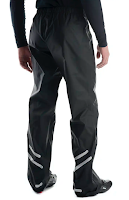
Get Rain Pants

In recent years, I've embraced rain pants.  ðŸŒ§ðŸ™ƒ

Nearing 50 years old, I'm not sure why I resisted them. Mostly a mix of these reasons:

  • Too much hassle to put on
  • Kind of ugly/not fashionable
  • Makes swishing sound

Now that I have a 4 year old, and life goes much more smoothly outside, I've taught myself that wearing them is so much more easy, freeing, and in fact - fun.  I wish I'd gotten over myself earlier in life and worn them more often.  Here are some reasons it's great to have them on.  In summary, FREEDOM:

  • Sitting on wet benches or anything wet is not longer a barrier
  • It rains here.  A LOT.  My legs stay dry. (Wow - who woulda thunk it).  "There is no bad weather, just bad clothing"
  • Overall I'm just more free to be out in whatever weather.
  • A wet bicycle seat isn't a barrier.  No need to wrap it in an ugly pastic bag.
Simple enough, and admittedly I sometimes hesitate whether to put them on or not. I've taught myself to just put them on most of the time whenever there is dew on the grass, or anytime it isn't summer (so Oct to Apr pretty much)

Throw in a pair of more comfortable rubber boots, (and of course a rain coat) and rain is no longer a barrier. I'm more free to be out in it & simple as that sounds - it's wonderful.

Below are some recommendations for rainpants, and a bonus link to the low-cut rubber boots I have found fantastic for almost all weather, and for biking long distances on my ebike.

In summary:  Get Rain Pants!  ðŸŒ§ðŸ™ƒ


Note: I live in North Vancouver, BC - and so am used to a LOT of rain each year.  Even places where it snows more than rains, I think rainpants will still deliver a lot of freedom in the shoulder seasons - Oct to Dec, and Mar to May (for the northern hemisphere)

Also - these are not affiliate links.  (Maybe I should work on that...!)

_______


Helly Hansen - Moss Rain Pants$50 CAD.  
Solid, effective, fully waterproof. 
Not always flattering.


MEC Drencher Rain-PantsMEC Drencher Rain-Pants 
($50 to $90 CAD)
The ones I use for everyday wear & ebiking in serious rain.


($80 to $160 CAD)
A $30 version is available at Mark's Work wearhouse, but I prefer the look & grip on these.


Friday, April 02, 2021

Combine Hundreds of Video Clips into One Long Video using Apple Photos and iMovie

This post is to help others who want to combine a whole lot of short video clips into one long video, with all the clips in time-order, with a bare minimum of editing and fuss.  It's to document a workflow to do specific thing I want to do, which is to export my videos from Apple Photos and then put them in time order in a multi-hour video.

Here is my job-to-be-done:

I have a little guy, who is super adorable.  He's a bit more than 3 years old, and I have been capturing videos on my iPhone and collecting a lot of video in my Apple Photos library over the years so far. I  want to enjoy those clips on my AppleTV in the living room, in a big long video - of his first year, his second year, and so on - rather than having to keep picking individual clips.  

I will watch this in the evenings with my wife "in the background" as we read our iPads or chat, or perhaps with friends or family, and with my little guy - as at times he finds it engaging to see himself when he was younger.

Also - I'm a busy guy, I don't want to spend hours editing and curating, because that drastically decreases the chance it will get done.   Instead, I want to take advantage of the computer - let it do all the exporting work, keeping them in date order, and building a long video - with a minimum amount of direct editing time by me.   

If I don't like the end result, and if the computer is doing most of the work, I can restart the process without feeling like it's a lot of work for me to do - just the computer, which can do the work while I sleep.

Why I'm Writing this Up

These instructions are relatively quick and easy, which is what I wanted.  It took me quite a long time to get here, which is why I'm writing them up.   I didn't find good guidance on the internet when I searched for it in the last few months, and I hope this helps some others who want to do the same thing.  I found quite a few others on Apple's help forums and elsewhere.  I even had a question answered on a popular Tech Podcast ATP - which unfortunately didn't help, but I had already found the below workflow before they responded.  The whole key was the image below, and finding that from Apple Photos export, there is an option to set the Filename: to "Sequential"

The Workflow:

  1. Make an album in photos and fill it with the videos.  (copying from Smart Albums can be helpful.) 
  2. Organize the videos in the order I want (ie use "sort by date")
  3. Use Menu Command: File->Export. (Shift + Cmd + E)
    • Chose Sequential as shown below. This was the key trick.
  4. Drag into iMovie event Library, and then into the timeline there, then export as 4k, 60fps etc.
  5. Iterate 1 or 2 times:  
    • When watching, if there is a clip I don't want in the big video, I just skip over it while watching it on the TV.  I may delete it from the Apple Photos album and re-export a couple times before I decide these long videos are "done enough."   I used Airplay from Quicktime on the Mac to the AppleTV to start, and these are working well enough I am now using Plex on the AppleTV, which is a worthy improvement.


Things I Tried That Didn't Work:

1. Exporting as unmodified originals from Apple Photos

  •  Date stamps were preserved, but key edits like rotations weren't perserved, and other edits I had done that improved the videos, like trimming boring parts in the library.  Where I had corrected dates & times in the Apple Photos Library, those were lost too.

2. Exporting as "filename" from Apple Photos

  • Videos don't have built in EXIF data that stores date formats, so programs often have to use the Date Stamp or the filename to sort.  This was leading to videos imported into iMovie in random, non-sequential order - which was the whole problem.  

3. Apple Photos Slideshow

  • Max resolution is 1080p and 30fps. It also was really choppy - worse than you'd expect from 30fps.  For a while I was considering tolerating it, but it was just terrible - it didn't work for me.

4. I had ffmpeg and Permute recommended to me, but didn't try them. 
  • I didn't try either of these, and ffmpeg seems very fiddly to me.  I'm sure I could get it to work, but once I figured out that sequencing the files solved the problem, then iMovie was the natural choice.  I realized I had not been stating the problem well - but don't think I could have stated it clearly until I figured out the solution.  The problem turned out to be: "Exporting from Apple Photos in a way that preserves edits and date order."   Once I had that solved, iMovie worked well for me, and gives me capability I can apply quickly like cross-fades, and I could later add music underlay if I felt so inclined.


Something else I learned:

Video files apparently don't really have integrated EXIF data the way photos do. Similar functionality to EXIF is usually accomplished with an external file often called an .XMP that has that same data in it, but because it's a separate file, it's not as good as jpegs with EXIF data embedded. Often the file date created is the only thing a program can use to guess when the video was created. 

From Apple Photos exporting unmodified originals preserves those date stamps, but if you simply "Export..." - the videos, then for many files with edits - new files are created with date stamp of the date they were exported, which wasn't working - see #1 & #2 above.  The key was exporting as "Filename: Sequential."


Last Tip

I also found that 4 to 8 hour movies were a bit too long in practice.  We didn't get to the end of them often, so I  wound up dividing the Apple Photos albums into multiple parts, and going with 2 to 3 hours of video in each part.  The workflow still applies, just a practical learning item worth sharing.

Wednesday, October 14, 2020

Parenting: Podcasts are Great for Learning

Long time readers will know I'm a huge fan of podcasts.  I devour them, especially when washing dishes, doing laundry, or any of the things in life I don't enjoy, but by "temptation bundling" I make getting them done more tolerable - sometimes even pleasurable.

But I digress - I am writing this post to strongly endorse a specific parenting podcast:  

I 110% love this podcast, and find that the format is so helpful. She models the words and intonation she would use, and I find I can reproduce those same sounds myself- and even better - they often work!

I've been finding some amazing learning for myself through this podcast by switching my perspective to a "coaching mindset" - which is seeing that my kid wants to do the right thing and needs my help to get there. (ie, coaching)

Coaching is often talking and guiding him to "good behaviour" - but a good coach also configures the environment such that my little guy is "setup for success." So it is my responsibility to be attuned to his needs and his state of mind such that when we need to exit a situation, or better yet not get into it in the first place. A good coach decides where the playing field is, how often practice will happen, and what we practice - it's the same with a good parent.

I've found searching through the Unruffled back catalog is great for individual challenges we find ourselves facing (defiance, setting limits, and so much more). She mostly uses listener questions and works through them. Initially I found her sounding "a bit lacking-in-confidence" - but later grew to appreciate that none of us really know what we're doing - and her humility is a strength.

Anyway - as you can tell, I am a huge fan of Janet Lansbury and her podcast:

A few of my favourite episodes to get you started:

Saturday, April 04, 2020

Bail out Transit, Not Airlines

Transit - including buses & subways - is an essential service.

Translink (Vancouver), TTC (Toronto), and STM (Montreal) - are all getting nurses and grocery store clerks to work day in & day out.  They have always been doing this, but COVID-19 reminded us of just how important (foundational!) front line workers are to our lives.  That means boring old city-buses as well as subways and the like here in Canada.

Air Canada and Westjet are more top of mind to the white collar workers who make bail out decisions, but transit serves more people day in day out.

Transit is not just a business that takes fare revenue.  It also serves the public good - enabling transportation of people who don't drive (perhaps they are very young, very old, or otherwise don't have a car).  On some level we keep bus routes with not-so-full buses, because we want to ensure coverage to less busy areas of the urban and suburban landscape.

We are being shown they must serve the public good when governments ask transit agencies to have buses ride mostly empty - to both maintain coverage for essential workers, and so that physical distancing can be maintained.  It was never just about riders and fare collection - transit has always had a public-service role that was part of it's mandate.

I'm not fully opposed to bailouts for airlines.  Such precise decisions are mercifully above my pay-grade. I do think we don't see in-plain-sight the key role transit plays in our lives, and so want to help draw attention to that story.  I would also keep in mind that Airlines do pollute a lot, so let's make sure their fares are priced to capture all negative-externalities, like greenhouse gas emissions and noise pollution.  The important thing is that we prioritize.   A more accurate headline for this post might be:  "Bail out Transit first, and then Maybe Airlines"

Let's make sure that thanks to COVID-19 that we prioritize any bail-out funding according to our values, to doing the greatest good - that helps the most people,  because it is now crystal clear how critical transit is as a public service, and as public infrastructure.

_____

More resources if you want to dive deeper:

  1. Great interview with a leading transit practitioner
    Jarrett Walker - on youtube so watch, or just listen like a podcast.
  2. Bus drivers - frontline workers providing essential service - are dying around the world
    from COVID-19.  This article highlights two recent deaths in New York.
  3. Great, delightful article in Wired on Cities prioritizing Walking, Bikes, then Cars - in that order.

Thursday, November 21, 2019

My Favourite Books in 2019

Inspired a bit by Barack Obama's annual lists, here is a list of my favourite books I have read in 2019, with a  little summary of what I found most compelling about them:

The Wealthy Renter

by Alex Avery
Link to more info about the book

I live in Vancouver, Canada's most expensive housing market, and a city that ranks high on the global list of expensive cities to live in.  My wife and I have a young son, and we rent.  We are both masters educated professionals, earning pretty solid incomes, decent savings, and no debt.   I have felt a lot of pressure to buy a house, and until I read this book had felt a lot like:  "well it's too bad we rent, but we missed the boat and it's ok."     This has shifted my thinking to being quite thrilled that we rent, and that in itself is a huge burden lifted.

I was thrilled to find this a solid book with an analytical approach to home-ownership, and written about the Canadian housing market. At the end it has analyses for the major cities in Canada, including Toronto, Vancouver, Montreal, Calgary, and more.   It didn't take a lot of extra analysis to make it apply directly to me.

Some key points I took away from it:

  • A clear framework for understanding that real-estate values is about the land appreciating, while all aspects of the building depreciate. 
  • Spending on the building is consumption, and some wealthy people rent to help keep that boundary clear.
  • Over-housing - a new term to me, that is well explained here - is incentivized under the ownership model.
  • About 70% of Canadians own houses, so no wonder the rental stock is woefully undersupplied, and of inadequate quality in a lot of cases.
  • Between about 1992 and 2017 - an unprecedented run-up in house prices in Canada - the same amount of money invested in index funds would have still outperformed the housing market in most housing markets in Canada.
  • Approaches for making upgrades to my rental unit that are creative, potentially appealing to the landlord, and freeing from the feeling of "well, no point in making it nicer - we rent"


Human Transit

Human Transit: How clearer thinking about public transit can enrich our communities and our lives
by Jarret Walker
Link to more info about the book

Jarret Walker is a Transit planner.  This book is written in clear, simple, human language and is intended for the lay-person who is interested in how transit networks are built and operated within their city.

Transit networks are the most effective way to move people around cities.  Like most systems, there are some fundamental tensions in their design.

Coverage vs. Ridership:  A system optimize so that everyone has an opportunity to get on it, but this results in a network spread thin, and service that is not as frequent than if the system is optimized to move the most people - which means frequent service on the most ridden corridors.

 Many of us in North America, brought up in a car-culture that assumes that to move is to use a car,

My interest in this book evolved from my interest in Micromobility over the last few years, and learning more about how with a limited amount of street-space, we can choose the travel modes (car, bike, bus) that move the most number of people per hour.  You guessed it, the car moves the least people in any given lane, bikes more, walking more, and the bus the  most for any given street).

Fundamentally - cities, streets, and moving people within the city is a problem of geometry.  Cars occupy a lot of physical space.  If we shift the focus to moving people rather than cars, we see that there are ways to move people that occupy less physical space.  Simple Geometry. :)

The following graphic sums up some of the key points very well.  The Human Transit blog is a wealth of even deeper information.


The Thinking Ladder

by Tim Urban, Wait but Why?
Link to the series of posts

This is not yet a book, but I think it should be soon.  It's certainly book length, and includes some great thinking about thinking.

I found it at the recommendation of a business leader I'm currently quite a fan of - Tobi Lutke - CEO of Shopify - an important Canadian tech company based in Ottawa.

In part it "is a new language we can use to think and talk about our societies and the people inside of them."  (Tim Urban)

Go read it, and then let's talk!

Sunday, June 11, 2017

Mazda CX-5: Mounting a Thule Ski Box

We bought a 2013 Mazda CX-5 in October, and we're excited to use our new 4WD vehicles to head up skiing.

I got the factory roof rack installed and put on my Thule box, and was dismayed to find that the rear hatch wouldn't open.  It was a bit of a shocking discovery for a 4WD vehicle.


Fortunately, my wife's engineer  father Ralph had a great idea once I had dug into the issue. The front bar of the rack is the limiting factor, so we made and added these extensions from
aluminum stock I picked up at our local Rona hardware store.

The bolts & washers are all stainless steel from Canadian tire.  The ones you can't see are about 1" diameter inside the channels of the rack. 

I hope this helps you or others to be able to use your ski boxes more effectively too.

The end result:


Saturday, October 01, 2016

Bluetooth Headphones & Earbuds: My Recommendation After Trying 7 Pairs

I started this post several months ago, and hadn't finished it.  With announcement of of Apple's new Airpods, I'm getting asked more about wireless headphones, and this will serve to summarize my experiences and recommendations. I hope it helps you!

Wireless Headphones are Great

The first question is of course "Why?"  Why bother with wireless headphones when there are plenty of serviceable, inexpensive wired ones?

I was surprised just how freeing going wireless was, and for me - it's worth the added hassle of having to keep them charged.    It feels significantly faster and more convenient because:

  •  fewer wires to untangle when I get them out
  •  no wire to snake through my clothing and have in my pocket
  •  nothing poking out of the bottom of my phone making it larger in pockets
  •  nothing to unplug or get tangled when removing my phone from my pocket

My Two Favourite Types

I find these two types very useful:

  • over the head "studio style" headphones
  • two-earbuds-on-a-wire style earbuds.

The headphones style are great for throwing on quickly, and their size means battery life is great - 5 hours to 30 hours of playback on pairs I've tried.    Controls on the ear piece, which is large enough to operate easily.

I find the two earbuds style vastly superior to the single earbud "cyborg-style" that have been popular with real-estate agents and the upwardly mobile for making calls for years.      The two earbuds hangs easily around my neck, so I can use them and remove them without having to stuff them in a pocket.  This means I always have them with me - my first wearable device.


Things to look for:
  • Full iPhone support - I've found battery status is not always supported, and it's a great feature to have.  To be able to just look at your phone and know how charged your earbuds are.
  • Standardized forward & back controls.
  • Standardized call button controls to trigger Siri.


Downsides:

As anyone who follows tech closely will tell you - Bluetooth isn't the greatest of wireless technologies.  Even the Apple watch and iPhone have connection glitches, and they're made by the same company.  I'm hoping Airpods will improve on this, but we'll see.  ( I also think I will prefer the 2-earbuds-on-a-wire style, but again - we'll see when they come out...)

Recommendation

The ones I recommend are the Jaybird X2. Although they are pricey (about $200 Canadian), the 8 hour battery life is unmatched, the sound quality is good for music as well as talking & podcasts, and the controls are consistent and well built.   Other cheaper versions I tested (about 5 pairs!) were just not as good on all these dimensions.


Update, 24-Aug-2017:

Jaybird X3:  I have also now tried the Jaybird X3, and immediately returned them.  The have a proprietary connector that attaches to the microphone & volume adjustment.  If you lose the adaptor or are not where you have the adaptor, you can't charge them.  This was a show-stopper for me.
They also made the microphone & volume buttons larger and heavier - which seemed significantly inferior to me.

Apple Airpods:  I have also got a pair of the Apple Airpods now too.   I've had them for about 6 months, and the are very good.  The easy use & switching between mac, iPhone, and iPad due to their "W1 Chip" is a huge win, and while I can quibble about how well it works a bit, it's really great.

The lack of wire to connect the two is an issue for me, as described above.  It's a win for simplicity, and makes the case possible, which is also a hugely important win/part of the product.
That said, the lack of joining-wre also takes away from the jobs it does for me.      One key place is on my bike.  I find that my helmet straps knocks them out of my ears, and they fall off - a show stopper for biking, so I don't use them for that case.

I also choose the Jaybird X2 for my every day use at work, due the joining-wire that means I can more quickly pop them out of my ears, let them dangle, and then tuck them into my shirt.

I know, I know - first-world problems - but these are the details of my everyday experience with the various types.  Thanks for reading & my best to you!

Saturday, April 09, 2016

My Achalasia Story


Manometry charts showing Achalasia subtypes
Achalasia is a disease of the esophagus, which attaches between your voicebox and your stomach.   Normally food is pushed through the esophagus with involuntary muscle contractions called peristalsis.   In rare cases, this behaviour fails for unknown reasons.  The result is difficulty swallowing food, and eventually liquids.  Patients with Achalasia usually experience significant weight loss, a lot of discomfort while trying to swallow, and must adapt their diet to softer and softer foods like soup and mashed potatoes.

I started experiencing Achalasia symptoms in May or June of 2015.  They progressively got worse, to the point that I couldn't drink fluids in March of 2016.   I had lost 25lbs, and had become dehydrated and malnourished by the time I was admitted to hospital for surgery that would mitigate the problem.

What I hope to Achieve with this Post

  1. Summarize what happened for interested friends and family
  2. Help increase awareness about this disease, as it is frequently mis-diagnosed 
  3. Hopefully help others with Achalasia by sharing how my story unfolded

Beginnings

Achalasia has an incidence of about 1 per 100,000 per year, and a prevalence (how many people are living with it) of about 1 in 10,000.

Mine started in June of 2015 with the experience of being at a conference dinner table, and not being able to get food to go down properly.   This discomfort persisted for a couple weeks and I went to see my family doctor about it.      I had been experiencing pretty severe heartburn for about 6 months prior to this, or certainly chest pain that I interpreted as heartburn.

I was sent for a couple of tests over the summer - a Barium Swallow/Xray which showed "esophageal spasms" and not much reflux from my stomach.   The next test was to send a Endoscope (camera) down my throat, for which I was mercifully sedated, and it showed nothing out of the ordinary.     I was seeing a Gastroenterologist by this point and he was convinced it was acid reflux - often clinically called GERD.    We managed to get these tests done relatively quickly by being available at short-notice for cancellations.

My wife and I were of course doing our own research, as it was persistently uncomfortable, and I had been limiting my diet to try to get relief from the reflux and discomfort.  Achalasia is rare enough that  it is often misdiagnosed as GERD, and this happened in my case as well.   Thanks to the help of this great blog by an engineer in Ontario, my wife identified correctly that my symptoms sounded a lot more like Achalasia than GERD.

This was in August.  The most frustrating part of this whole experience was the waiting for further tests, appointments and stages.  For example - we were sure it was Achalasia in August, and it took until the end of February for my turn to get the definitive test that would confirm Achalasia: esophageal Manometry (examples of the results pictured above).   During that time I had gone from discomfort - eating softer foods over the course of an hour  - to being reduced to 3 to 4 boost-type drinks per day with hopefully some soup and/or well-mashed potatoes with gravy.

Diagnosis

At the end of February, the Manometry test confirmed what Lauren and I were already certain of:  Achalasia.  Fortunately we had done our advanced reading and so were aware of the options and ready to go to the current best practice treatment which is a Heller Myotomy, with a Dor Fundoplication.

Unfortunately, there was more waiting (and corresponding suffering for myself, my wife, and my extended family) in the non-urgent stream of the Canadian medical system.   I'm a fan of our system in general, but waiting at sometimes becomes unbearable.  By this point many in my family were getting quite worried, as I was now down 25lbs, and at times unable to eat even soup.

 Surgery

My surgery consult took a couple of weeks to be scheduled,  this initial appointment to discuss options with the surgeon was 5 weeks after the manometry test, with the prospect of having the surgery 5 to 8 weeks after that.  Unfortunately my ability to take in fluids and nutrients had continued to deteriorate, to the point that I went to emergency in later March, as I was unable to take in fluids and had become both dehydrated and deficient in nutrition (as well as sleep).

I was not sleeping several nights a week because food that had not gone down would come up in the middle of the night, waking me up to choking on it every 20 minutes or so.

I was admitted as an emergency patient because I was no longer able to get enough nourishment down, and put on an internal hospital waitlist for the surgery.  After another 5 days of eating & drinking absolutely nothing except for IV fluids,  I had the surgery in time for Easter.

Current Situation

I'm currently 2 weeks post operation, and already feel significant improvement.  I'm able to eat soft foods, including one of my favourites - Shepherd's Pie - as long as the quantities are kept small.   I look forward to returning to a mostly normal diet.