Back in 2019, inspired a bit by Barack Obama's yearly tradition of sharing his favourite books, I wrote up my favourite books of the year. It's high time I did it again.
Here are my favourite books of 2026, with a little about what I found most compelling in each. Three of the four are about our cities: how we get around them, and how we talk about them. No surprise there if you've read anything else on this blog. The other one is about a bird. Bear with me.
A Most Remarkable Creature
The Hidden Life and Epic Journey of the World's Smartest Birds of Prey, by Jonathan Meiburg
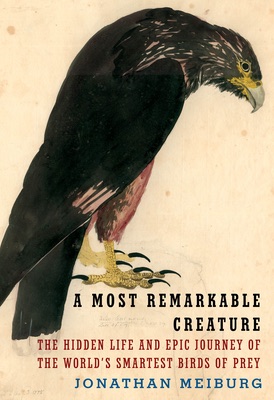
This is a beautiful book, and a real favourite of mine. On the surface it's about caracaras, a family of clever, curious birds of prey. Really, it's a global odyssey through geography and history, mostly across South America.
I learned so much from it. About South America in general, and about Guyana in particular, a place I knew next to nothing about. The book takes you on a journey up a river into Guyana, and into the almost untouched wilderness that still exists there, or certainly did when Meiburg made the trip. The imagery is so beautifully described that I could see it.
Meiburg is also an accomplished musician. He's the singer in the band Shearwater, and he reads the audiobook himself. He does the voices, and the sounds of the animals, so well. It's a delight to listen to.
It has become my go-to book for when I'm not feeling well. When I'm sick and can't really focus on reading, I put this on and let him take me somewhere far away.
Along the way I discovered a pioneering naturalist I had never heard of: William Henry Hudson. He was born in Argentina in 1841 and grew up on the pampas, but most people know him as an author in England, where he lived for the rest of his life. He was a contemporary of Charles Darwin, and even argued with him in print about birds. He was also a founding member of what became the Royal Society for the Protection of Birds, one of the early preservation societies. Someone well worth knowing about.
The audiobook is the best version. Get the audiobook.
Human Transit (Revised Edition)
How Clearer Thinking about Public Transit Can Enrich Our Communities and Our Lives, by Jarrett Walker
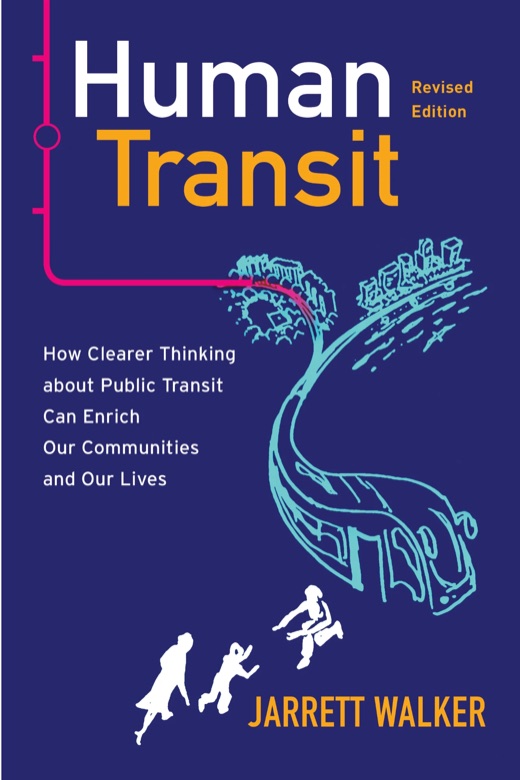
Human Transit made my 2019 list too. The updated edition came out in 2024, and it's well worth a read, or a re-read.
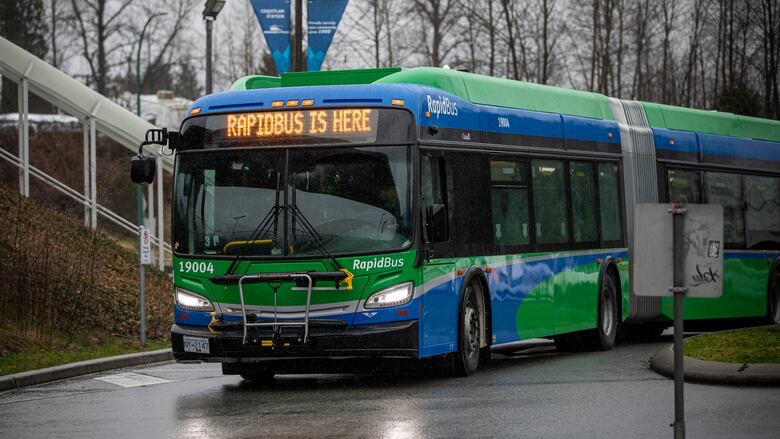
Jarrett Walker is a transit planner. He designs bus networks for cities around the world, including work with TransLink here in Metro Vancouver. But his background is in the humanities (his PhD is in humanities and theatre arts!), and it shows. He's a beautiful writer, and he communicates really effectively.
It's written so that a lay person like me can understand how transit works, and along the way, how cities work.
A few of the key ideas I keep coming back to:
- Ridership vs. coverage. What are the values of the community? If the buses have to reach every nook and cranny, they can only come every hour, or even less often. If you want to maximize ridership, you focus on the busiest routes and run them often. You can't fully have both. It's a real tension, so decide what the community values, and design the network to match.
- Frequency is freedom. When the bus comes every 10 or 15 minutes, you stop checking schedules and just go. That's a big part of the thinking behind my idea for a Ski Bus to Whistler.
- Trains and trams are cool, but buses are flexible. Buses are the under-appreciated workhorses, and the most important part of the network.
Curbing Traffic
The Human Case for Fewer Cars in Our Lives, by Chris and Melissa Bruntlett
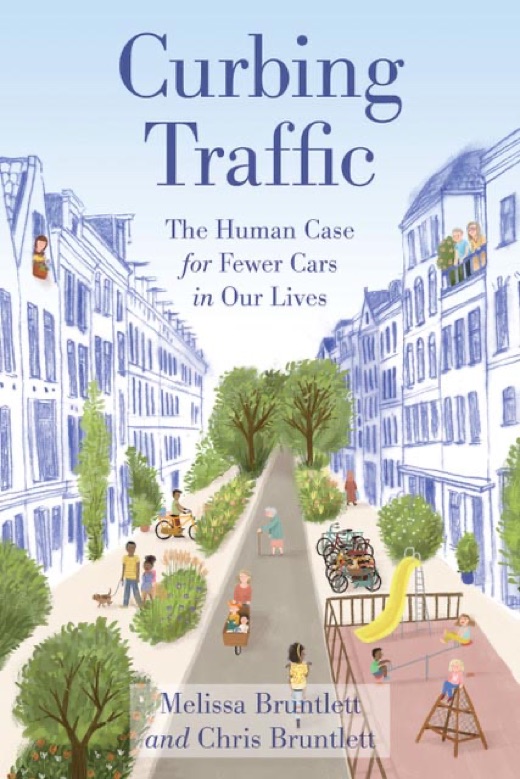
This book is a beautiful vision of the future I hope to live in.
It comes from the Bruntletts' own journey as a family. They lived here in Vancouver, then moved to Delft, in the Netherlands. There they discovered how much freedom and autonomy their kids gained once they were no longer dependent on cars, or on their parents, to get around the city.
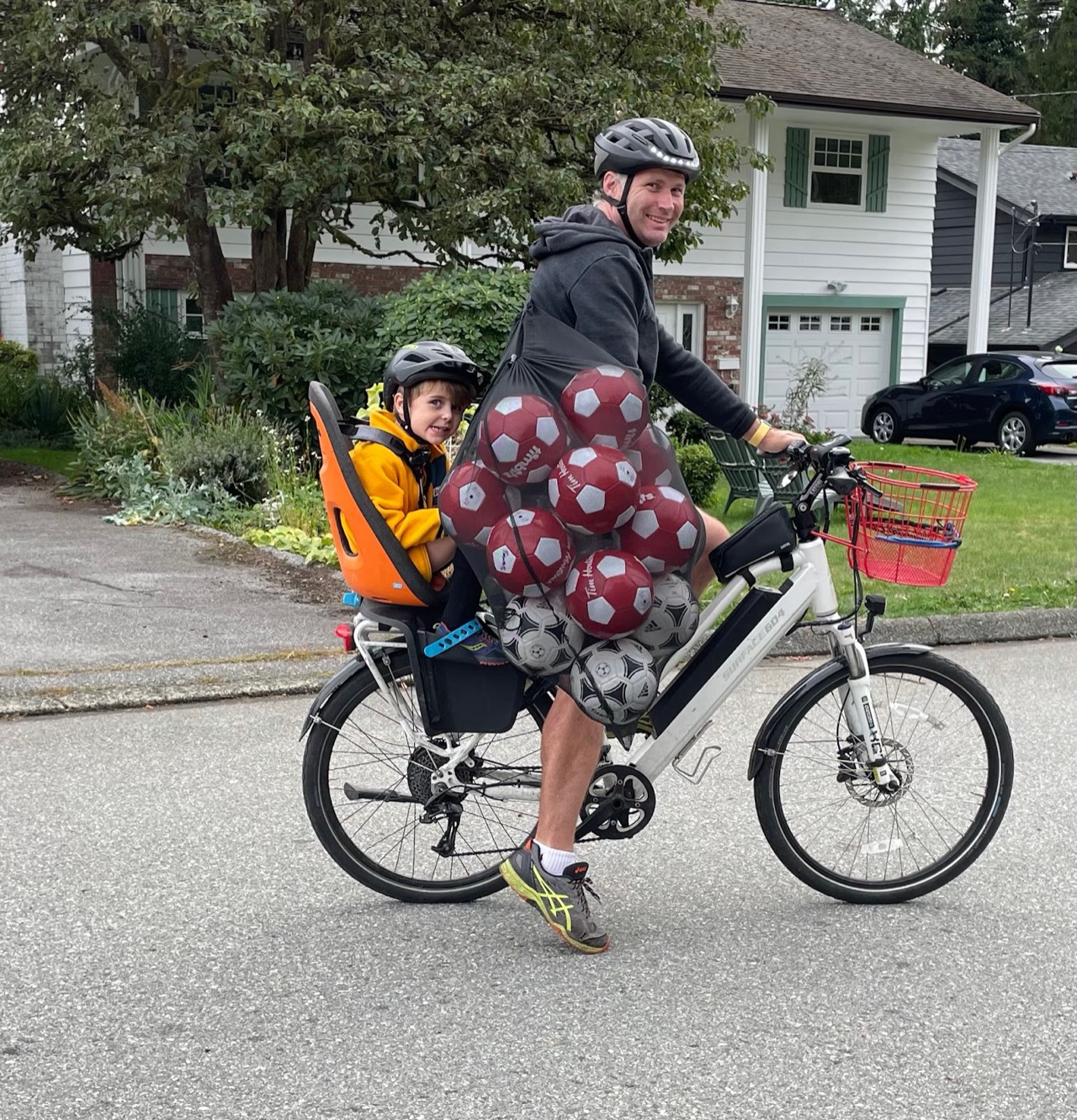
That one hits home. My son has learned his neighbourhood from the back of my e-bike, and I'd love for him to have that kind of independence as he grows up.
The book shows how well a less car-dependent city works:
- for women
- for children
- for the roughly 30% of people in our society who cannot drive
- and for so many more of us
Dark PR
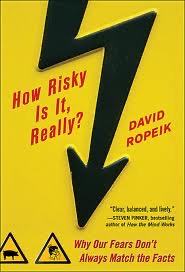
How Corporate Disinformation Undermines Our Health and the Environment, by Grant Ennis
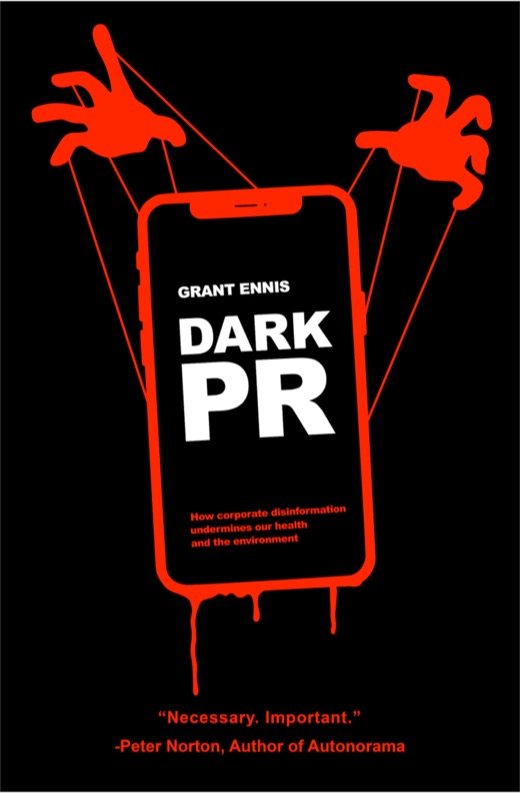
This is a book about how we get talked out of better cities, and better lives.
Grant Ennis has spent decades working in public health and the environment. In this book he takes apart the playbook that big industries (oil, cars, junk food) use to steer the public conversation away from the real causes of our problems. He calls it Dark PR, and he boils it down to nine frames:
- Denialism. "It isn't real," or "it isn't harmful."
- Post-Denialism. "OK, it's real, but it's actually good for you." Think of a road widening sold as an "improvement."
- Normalization. "That's just the way things are." Crashes become "accidents."
- Magic. "A new technology is coming that will fix it all." Self-driving cars, any day now.
- Silver Boomerangs. So-called silver bullets that don't solve the problem, and often swing back around to hit us.
- Victim-Blaming. "It's your fault." The pedestrian should have been wearing brighter clothes.
- Multi-factorialism. "It's complicated, there are so many factors." So nothing much gets done.
- Ethical Consumerism. "Just buy the right product." Fair Trade chocolate is nice, but it won't save the world.
- Divestment / Pseudo-Activism. Actions that feel like activism, but leave the real causes untouched.
What makes these frames so effective is that each one holds a kernel of truth. Ennis's answer isn't to feel guilty, or to shop harder. It's to organize together, and push our governments to change the systems that are causing the harm.
A good example of how much the words matter: "global warming" versus "climate change." In the early 2000s, Republican strategist Frank Luntz advised George W. Bush's team to stop saying "global warming" and say "climate change" instead, because it was "less frightening." Same problem, softer words.
Grant Ennis is part of the Urban Truth Collective, a great group of people, including Tom Flood and Brent Toderian (Vancouver's former chief planner), who are speaking the truth about cities. Cities are one of humanity's greatest inventions, and we can do so much better with them in the 21st century: make them more human scale, climate-positive, and better for the people who live in them.
The nine frames of Dark PR are a key framework for thinking about, and acting on, making our cities better. Once you know them, you'll start spotting them everywhere: at a council meeting, in the comments on a local news story, in a car ad.
A Bird, a Bus, and a Better City
That's my list for 2026. If the last three get you fired up about how our own streets and buses could work, come join us at Better North Shore. That's where most of my writing about our community lives these days.
Go read them (or listen, especially to the first one), and then let's talk! 📚🙃